
I had a coworker ask me a question last week that I’ve been thinking about since. “Where do your book ideas come from?”
I wasn’t quite sure how to answer. I told her that the idea of the twist in Enemies of Doves came from my best friend. But the rest of it? Well, I knew I needed to build up to that twist, and I realized the story had to be set in the past or that twist couldn’t work. I knew what I wanted the title to be so I knew I had to work doves into the plot somehow. And I knew as a theme I wanted to examine the relationship between brothers.
I’ve always been fascinated with the sibling relationship, probably because I’m an only child.
One of my favorite movies is Legends of the Fall. I love the focus on the relationship between the brothers, responsible and cautious Alfred and wild and reckless Tristan. These characters made such an impression on me in my teen years that I made brothers the focus of the first novel I wrote from 8th to 11th grade.

That novel, Years of April, was set during the Civil War. The entire plot of it pretty much came to me one summer night in 1997 after my first viewing of Gone with The Wind. Similar to Legends of the Fall, I had a trio of brothers as main characters, but heavily focused on the oldest two whose inherit differences in morals and politics reach a boiling point during the tumultuous years of the Civil War.

As an adult I attempted to edit that book but eventually abandoned it to write Enemies of Doves. Yet I wanted to keep the relationship between brothers at the heart of my new story as well.
I once had someone tell me, “I really want to write a book, but don’t have an idea of what it could be about. It feels like everything has been done before.”
In a way she’s right. It all has been done before. There’s nothing new under the sun after all. I re-watched Legends of the Fall recently and noticed some other similarities between it and Enemies of Doves. War, grief, a love triangle, grievances between fathers and sons, sacrificial love etc. These themes have been presented in countless books, movies, and songs since the beginning of time. There’s nothing terribly unique about any of them, but we can all identify with most of them. They are universal and apply to all of us regardless of culture or geographic location. They tie us all together. So, I think these sorts of universal themes will always come out in my books.

I was curious where other authors got some of their famous ideas, so I did some research.
Many of the ideas for Stephen King’s books came to him in dreams, including one of my favorites, Misery. On a flight King dozed off and had a dream about a popular writer who was kidnapped by a psychotic fan. He woke up, made notes on his cocktail napkin and started writing Misery that night in his hotel.

Let me just say, I’m a big Stephen King fan, and if I had dreams that were like his books, I’d never want to fall asleep.
J.K. Rowling was stuck on a train when an image of a boy starting wizarding school began to form in her mind. She didn’t have a pen, so she spent the rest of the four hours on the train developing the story in her mind.
Author Suzanne Collins got her idea for The Hunger Games channel surfing one night. On one channel she saw young people competing in a reality TV show, and on another channel footage of the Iraq war. Those two things fused together in her mind, and Katniss Everdeen was born.
Children’s author Roald Dahl kept an idea book from childhood on. In high school he had an idea about a big friendly giant, so he wrote about it in his idea book. 50 years later he penned The BFG.
I also have a similar book where I keep my ideas and they come from a variety of places.
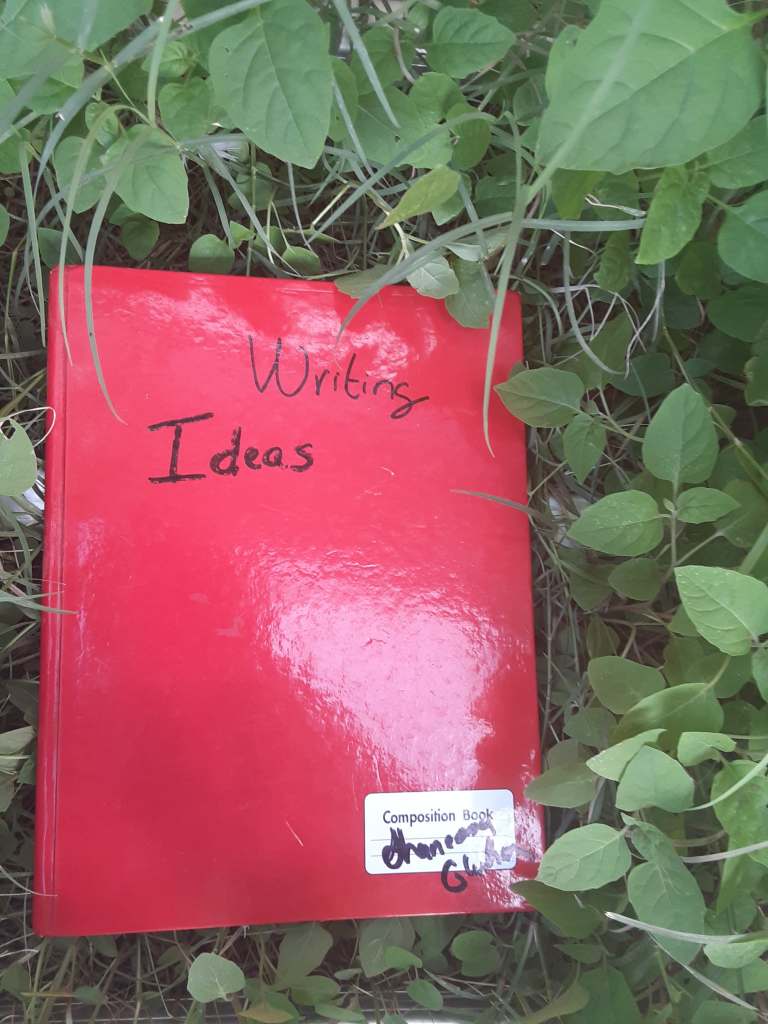
I have some really good ones that I’m not going to share because I think a few of them may end up as future projects. So instead I’ll share one that almost was.
My son Asa was in love with Curious George from birth to age 6. If Curious George was a part of it, we read it, watched it, and bought it. One night while frantically searching Amazon for a Curious George book we had not yet memorized; I saw a children’s book by Louise W. Borden and Allan Drummond called The Journey That Saved Curious George. I ordered it and two days later read it in one sitting.

The creators of Curious George, Margret and Hans Rey, were German Jews living in Paris who had to make a harrowing escape when Hitler’s army advanced on the city. They started on bikes with the manuscript for Curious George in their backpack. It took four months to reach America, and their journey from bikes to trains to ships is truly more thrilling than anything a fiction author could create. A year after their ship docked into America, that manuscript they carried all those miles was published and has never been out of print.

I couldn’t believe I’d never heard this story, and I really wanted to share it through a novel. It would be biographical fiction, similar in style to books I love such as The Paris Wife by Paula McLain, which is a fictionalized account of the life of Ernest Hemingway’s first wife, Hadley Richardson
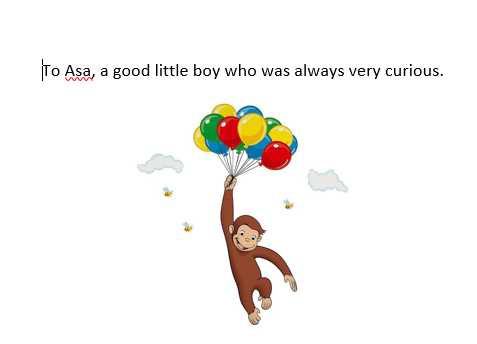
I wrote over 20 pages of ideas and tidbits in my notebook about this one. I even had the dedication worked out.
I honestly planned for this to be my next book after Enemies of Doves, but I ran into some issues. First of all, one of my favorite aspects of writing is character creation, and I wasn’t able to do this for my main characters. They were real people, and I felt a lot of pressure to get them right. The only book I could find about them was that children’s book I had, so I prepared to start reading scanned pages of the journals Hans wrote to get more insight into their personalities.
It was around this time that I stumbled upon a documentary called Monkey Business about the authors and their journey with Curious George. I was so excited to watch it. I got my notebook out and was sure it would be the final push of inspiration I needed to get the book going. However, by the end I had decided against writing the book at all.

You see, Margret Ray was a very polarizing figure. On one hand, she was a formidable business woman. She’s the one who made the deals and had the head for business. She pushed her husband to stop wasting his talent working for the family business and take a chance on this clever little monkey. Curious George would never have happened without her. She was the first one to see that Curious George could be marketable outside the book and started merchandising long before it was the norm for children’s book characters. She was incredibly intelligent and driven.
On the other hand, she was often very rude and prone to temper tantrums. The documentary included many people in her life who had some troubling stories to share about her verbal abuse and tirades against customer service workers. She was known as a public nuisance basically. She didn’t seem to like children and often ran off the neighborhood kids who came to visit her husband and hear stories. She was also quoted as saying she never fell in love with her husband, that they were just friends. It obviously worked for them and they built a life together, but it was just very different from the book I envisioned writing

I thought maybe I could make Hans the focus, but I knew there was no telling the story without Margret. I felt overwhelmed at the idea of getting this complex character right. How would I show these unfavorable parts of her while still making her a character people rooted for? Could readers love the story even if they hated Margret? How could I present her positives so she was balanced? Not to mention, my head was spinning with all the legal issues that can arise when you use real people as characters and portray them unfavorably.
I honestly think it’s just a matter of time before a better writer than me tells this story, and I will certainly read it when they do.
Not even a week after learning that information about Margret, I was listening to the radio while driving in Texas with my youngest son. I passed a creek named Crow’s Nest Creek and thought that would make a great book title. (I have a page in my idea book of just book titles). At that moment, an old Keith Whitley song came on the radio, I’m Over You. In my brain a connection formed between this song and this creek. I imagined a family torn apart by something that happened at Crow’s Nest Creek. Something that left a father and daughter estranged. I knew this father and daughter were huge Keith Whitley fans and that the father went to prison the day Keith Whitley died. (I had no idea why yet). And even though this song is seemingly about the loss of a romantic relationship, this daughter associated it with the loss of the relationship with her father.
I also remembered a video I’d seen recently about the intelligence of crows and how they can be trained to speak and mimic human voices.
This creek, song, and YouTube video came together to form a story. By the time I pulled into my driveway, I had a basic plot of A River of Crows outlined in my mind.
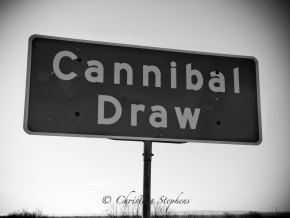
It should be noted that I also passed a creek called Cannibal Draw on that drive, and thought that too would be a great name for a book. Thankful a story idea didn’t form then because it would be a much different and darker story wouldn’t it?
Ideas really do come from everywhere— a favorite movie, a nightmare, a newspaper article, our best friend, a childhood memory, an overheard conversation between strangers, people we’ve loved, people we’ve hated, a small creek we pass by, a song on the radio that stirs something inside of us. Ideas present themselves to us every day and all are bubbling with possibility. Pay attention to where your imagination wanders.
But the fact remains, the ideas are the easiest part. Neil Gaiman puts it like this, “The ideas aren’t the hard bit. They’re a small component of the whole. Creating believable people who do more or less what you tell them to is much harder. And hardest by far is the process of simply sitting down and putting one word after another to construct whatever it is you’re trying to build: making it interesting, making it new.”
But that’s a blog for another time.

If you’re a writer, I’d love to hear the inspiration for one of your books or stories in the comments section.
 Shanessa Gluhm
Hi, Shaneesa. I loved reading this blog. Ideas really do come from everywhere. When I was writing On Mystic Mountain, the end to the story finally came to me while I was riding in my car. I needed a name for the friend in the last chapter. We were driving through a tiny town called Marlow. I didn’t want to spell it exactly like the town, so I changed it to Marloe.
LikeLiked by 1 person