
A reader recently sent me a message via social media and told me she had really enjoyed my book and given it 4 stars on goodreads last month, but she was going to change it to 5. Why? Her exact words were, “I can’t stop thinking about your characters. I feel like I know them, and they’ve haunted me.”
Wow. If there is a better compliment than that, I’m having trouble imagining it. I know that feeling well –where you think about a book’s characters long after the final page.
Something I’m really proud of is that over half of the reviews for Enemies of Doves mention character development. There are a lot of aspects of writing that I’m not great at, description being one of them. A lot of the descriptive passages in my debut were added after I had finished the third draft and realized the description deficit. I really had to push myself to find places I could add the parts I have a habit of skipping when I read other books.😬
Character development comes much easier for me, but it’s still quite the process and involves many resources.
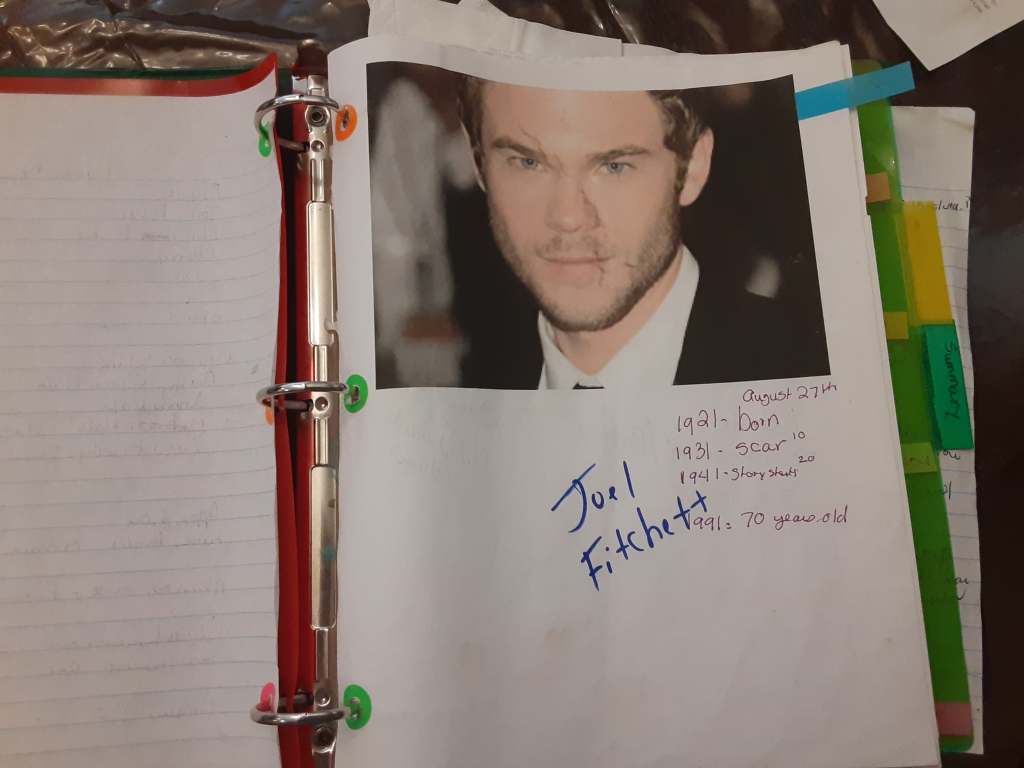
I start with the simple…appearance. I don’t spend too much time here because I believe the reader only needs a small amount of physical detail, and then they can let their imaginations fill in the rest. Plus, as before mentioned, I don’t do well with description. I am wholly unable to imagine a unique face, so I usually picture actors and actresses as characters when I read and when I write. So, I did print out pictures of actors I saw as various characters and even had my husband Photoshop the scar on Joel. This helped me because I had a visual to look at any time I described the scar and thus could keep it consistent.
The next thing I do is figure out a brief backstory for each major character, including an emotional wound. This handy thesaurus by Angela Ackerman and Becca Puglisi is the resource I turn to for that.
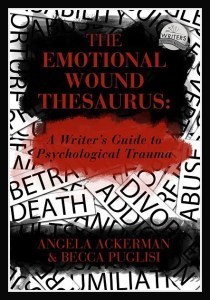
I believe writers have to know not just why the character is the way they are, but what made them that way. Emotional trauma shapes who we are and how we see the world. This book includes a list of traumatic situations common to the human experience and in-depth study on a wound’s impact, including the dysfunctional behaviors that can arise from various painful events. In Enemies of Doves many of my characters past emotional traumas were relevant to the story so the reader learned about them, but some characters emotional backstories didn’t make the book. They were only there to help me understand them and thus write them better.
In The Emotional Wound Thesaurus each trauma lists common personality traits that can arise. For instance, a person who experienced a nomadic childhood might be more adaptable and adventurous than your average person. Or on the negative side, they might be a bit antisocial. So I chose at least 3 positive and 3 negative characteristics for each major character and then looked them up in more great books by Angela Ackerman and Becca Puglisi, The Positive Trait Thesaurus and The Negative Trait Thesaurus.
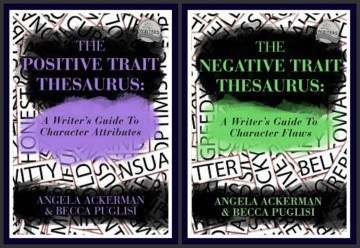
In these books you can look up various traits and are given possible causes, attitudes, behaviors, thoughts, and related emotions for said trait. For instance, if someone is ambitious, The Positive Trait Thesaurus tells me they may wake up early, that they are unlikely to be satisfied by the status quo, and that they may be a risk taker.
In Enemies of Doves one of Crawl’s traits was that he was superstitious, yet I never wrote, “Crawl was a superstitious man.” Instead I showed it through various ways. (Keeping horseshoes above his doors, placing acorns on windowsills, abiding by horoscopes etc.) When you show rather than tell, characters leave a much bigger impression on the reader.
Another way to make sure characters feel real to the readers is to give them both positive and negative traits. You know that awful interview question we’ve all been asked……. “What is your greatest weakness? Well, too often we try to actually make it a positive characteristic so we don’t sound so bad. “I care too much. “I work too hard.” “I’m too detailed.” Sometimes as writers, we want to do this with our beloved characters too. We want to make them so good that even their weaknesses aren’t really that bad. This can make characters fall flat.
Iconic characters have a mix of positive and negative traits. Harry Potter is brave, kind and loyal, but he’s also impulsive, stubborn, and reckless. Jay Gatsby is hopeful, romantic, and resourceful, but he’s also delusional, restless, and naive.
Joel Fitchett is the character that my readers seem to like best, but in spite of his many good traits, he is also jealous, cynical, and spent much of the book feeling sorry for himself. As a writer, I got annoyed with him at times, but I didn’t want him to be a caricature of a knight in shining armor. That may work in some genres, but wouldn’t work for my book. I wanted all my characters to be human. The more you try to make your character flawless, oftentimes the less readers relate.
After I choose the traits, I type out all the information from the book about each trait. This takes a while. I could just highlight and use the book, but I find typing out these traits and behaviors really helps me. As I’m typing, I think, “Where could I work this behavior into the story to show this trait?” I then put the lists in my character notebook for easy reference.
Characters also need goals and motivations that propel the story forward. Harry Potter wants to kill Voldemort. Gatsby wants to win Daisy back. Garrison wants to find the truth about his family. Once I know what the characters want, the plot comes much easier because all I have to do is create a series of internal and external conflicts that try to thwart that goal.
For Enemies of Doves, I did all these steps for my point of view characters, Garrison, Joel, Clancy, and Lorraine. I also did it for Molly and Crawl.
Side note, I never actually intended for Lorraine to be a point of view character. She was one of the last characters I created and was a pretty minor one. When I started writing the chapter where Lorraine’s family comes to town, I was writing it through Clancy’s point of view and it wasn’t working the way I wanted it to. Most writers will tell you that, yes, our characters do talk to us. And I clearly felt Lorraine telling me she wanted a turn to speak. So, I rewrote the chapter through her point of view and that scene just came to life. To this day it’s one of my favorite chapters and one of only three chapters that neither of my editors made any significant changes to.
The original positive traits I chose for Lorraine were gentle, objective, and sophisticated. On the negative side, she was materialistic and pretentious. After she came to life in her first chapter, I knew that wasn’t her at all. So, I went back to my guidebooks and chose new traits for her. On the positive side, she was idealistic, spunky, and socially aware. Negatively, she was stubborn, melodramatic, and indecisive. I then went back and reworked my outline to add more Lorraine and chose scenes where she would be a better point of view character than whoever I originally intended. Maybe because her personality changed so much, her appearance did as well. I crossed out brown eyed brunette in my notebook and wrote green eyed blonde.
Based on reviews and feedback, I’ve been pretty shocked at how many readers don’t like Lorraine. That’s why I’ve been so hesitant to admit she was my very favorite character. Maybe I’d feel different as a reader, but as a writer I think I loved her so much because she came to life for me in a way I never expected.
My current work in progress is a bit darker than Enemies of Doves, thus the characters are too. Sometimes I worry if readers will like them. They have many secrets, lots of baggage, and are messing up things pretty badly right now. Yet, I know them all intricately. I know their good traits and bad, I understand why they are the way that they are. If I can show that to the reader, whether they like these characters or not, they will, at the very least, remember them.
If you are a writer, I strongly recommend all the books above for creating characters. They are so helpful that I almost feel like I’m cheating. There is also a fabulous book about writing villains called Bullies, Bastards and Bitches by Jessica Morrell.
Now, to find books that can help me cheat in writing description…….
 Shanessa Gluhm